
Direct Primary Care (DPC) is getting noticed by clinicians, patients, medical students, benefits advisors, employers, legislators, and the general population as a genuine solution for access, affordability, and improved health outcomes. DPC is no longer in the early adopter phase and has gotten mainstream coverage with substantial growth on the patient side and the practice side. The case for DPC has truly never been stronger, and it’s an exciting time to be a part of this movement.
National Direct Primary Care Day is November 1st. Having had its inauguration on November 1, 2025, this is the second annual National DPC Day. The day was chosen because November 1st is when open enrollment for insurance coverage begins. National DPC Day presents a moment to amplify awareness of DPC to people reevaluating their healthcare options, and there is more than enough data, both quantitative and qualitative, to justify greater investment into the DPC model of care.
2026 DPC Data Highlights
According to Hint’s 2026 DPC Trends Report, over a period of 8 years (from 2017 to 2025), DPC membership per 100K Americans has expanded by 837% with an average annual growth rate of ~33%. Practice growth is also increasing with DPC clinicians growing by 555% per 100K Americans over the same time period, while traditional primary care continues to experience shortages.
Beyond the figures, there is an encouraging sentiment among DPC patients and clinicians alike–a longitudinal relationship that goes beyond “transactional” visits for specific episodes of care that is translating to positive outcomes. A study by Phyx that evaluated certain metrics of 18 healthcare providers before and after DPC over a 6-month period at Anovia Health showed that burnout decreased by 48%, job satisfaction increased by 68%, and care time rating increased by 58%, while patient panel size intentionally decreased by 74% and average visit time increased by 98%.1
On the patient side, Hint’s Patient Experience Benchmark Report evaluated the DPC experience of 1,537 patients from 12 DPC practices across 8 states over a14-month period. The report was based on the Person-Centered Primary Care Measure (PCPCM) tool, and the DPC practices received a total PCPCM score of 89%. For ease of care access via patients’ respective DPCs, the total score was 97%.2
Ongoing Research and Data Collection
As DPC grows, so does the development of more sophisticated data collection, which further validates the case for DPC as the heart of care. Beyond Hint Health’s growing database and associated reports on DPC, Milliman, Inc. has become a leading authority on evaluating the financial and clinical impacts of Direct Primary Care (DPC) having conducted multiple studies on DPC and launching its proprietary DPC Research Database (DPC-RD) in January 2023.
The DPC Research Database integrates directly with major electronic medical record systems (EMR) and billing platforms that dominate the DPC ecosystem including Atlas.md, Elation, and Hint Health, looking at up to 24-months of retrospective anonymized patient data.
Since employers need financial evidence that investing in DPC will decrease total healthcare costs across a diverse employee population and DPC practices don’t file any insurance claims, there was a major information gap. Managed by Milliman principal actuaries Frederick "Fritz" Busch and Dustin Grzeskowiak, the DPC-RD solves this by standardizing data collection across independent clinics nationwide.3
The database provides a holistic view of actual patient encounter rates, clinical outcomes, and referral deflections (number of specialists and ER visits avoided), giving employers the actuarial evidence needed to confidently build high-deductible wraparound health plans with DPC at the center. Milliman’s massive sample size mathematically controls for the "healthy user selection bias" that often skews healthcare studies with “concurrent and prospective risk adjustment,” which satisfies employers’ need to objectively evaluate the care model, including for patients with more costly chronic conditions.4
With nearly six years of nationwide aggregated data, the DPC-RD is a valuable resource for employers and presents an exciting opportunity for the accelerated adoption of DPC as a part of innovative health plans.
The Current Opportunity for DPC
This year marked the first year that DPC membership fees qualified as HSA eligible due to legislation passed - the Primary Care Enhancement Act as part of the One Big Beautiful Bill Act (OBBBA). While this legislation has made it more palatable for employers to pair DPC with a high-deductible health plan (HDHP), we don’t yet have the insights of how much DPC membership has grown as a result of it.
Current legislation limits DPC membership fees that can be covered via HSA ($150 per month for an individual and $300 per month for a family) and the fees don’t count towards HDHP deductibles. Therefore, there is room for new legislation to pass that further encourages the proliferation of DPC adoption and our friends at Direct Primary Care Coalition are working hard advocating for this as they did for the Primary Care Enhancement Act.
We reached out to some DPC clinician owners to get their take on what the biggest opportunity is for DPC now.
Angela Andrews, MD of DPC West Michigan in Grand Rapids, MI (in business 1 year) and Cora Mattie, MPAS, PA-C of Balanced Healthcare in Denver, CO (in business over 6 years) both agree that it’s employers and with 60% of DPC memberships covered by an employer-sponsor according to Hint’s 2026 DPC Trends Report data, a large part of DPC growth has been driven by employer adoption.
More [employers] are waking up to the fact that traditional insurance isn't serving their people, and DPC is the answer — but independent practices may need to organize, so employers can actually buy it at scale.” - Angela Andrews, MD (DPC West Michigan)
This is where DPC networks such as Hint Connect play such a critical role in facilitating access to DPC, particularly for larger employers or geographically dispersed ones.
Employers [are] the only opportunity to truly impact healthcare reform in this country.” - Cora Mattie, MPAS, PA-C (Balanced Healthcare)
Undoubtedly, given that most Americans access healthcare through their employer, getting employers onboard with investing in DPC will drive significant impact.
There's still a large knowledge gap for individuals and small business owners being aware that DPC is an affordable option to get all their primary care services covered. It's much better than when I started 11 years ago, but closing that gap is the largest opportunity.” - Delicia Haynes, MD of Family First Health Center in Daytona Beach, FL
This is the purpose behind National DPC Day - a lot of people and businesses still don’t know about DPC as an option for healthcare, and it will take all of us to change that.
A Solution for the Uninsured
DPC memberships have become a viable option for people who are uninsured to have a reliable and affordable way to access primary care. In fact, of the three DPC practices interviewed, all serve a sizable patient population who are uninsured.
-
DPC West Michigan: 30% uninsured patients
-
Balanced Healthcare: 33.5% uninsured patients
-
Family First Health Center: 40% uninsured patients
Obtaining health insurance is complex if you don’t have the benefit through an employer - the options available are often cost-prohibitive, and the healthcare marketplace has seen massive cuts to premium subsidies this year. There were two enhancements to the Affordable Care Act during COVID that increased subsidies to premiums: the American Rescue Plan (ARP) ratified in March 2021 and the Inflation Reduction Act (IRA) ratified in August 2022.
The ARP and IRA also eliminated the upper income threshold to receive subsidies, but both were temporary and expired at the end of 2025. Now families with household incomes that are above 400% of the federal poverty level are no longer eligible to receive any subsidies to insurance premiums in the healthcare marketplace.5
This change resulted in 5 million Americans dropping enrollment in 2026 through ACA marketplace insurance plans according to the director of KFF’s Program on ACA. These Americans most likely could no longer afford the insurance premiums without the previous federal subsidies.6 DPC presents an accessible, affordable, and predictable alternative to get reliable care.
Patients Love DPC!
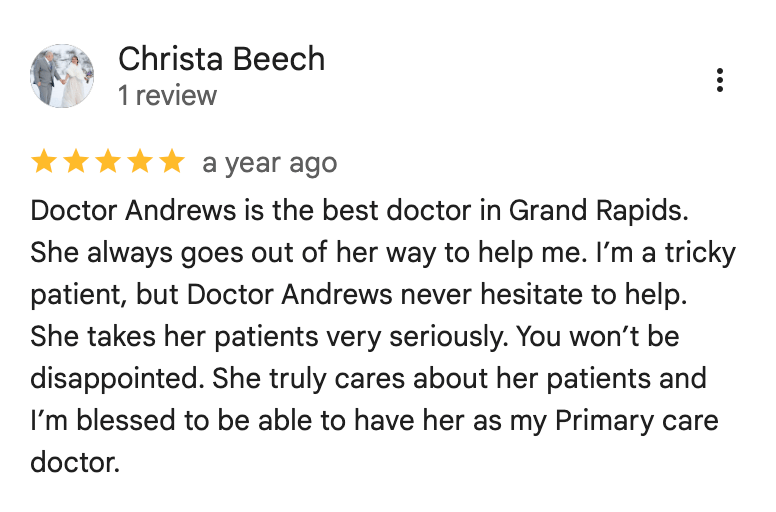
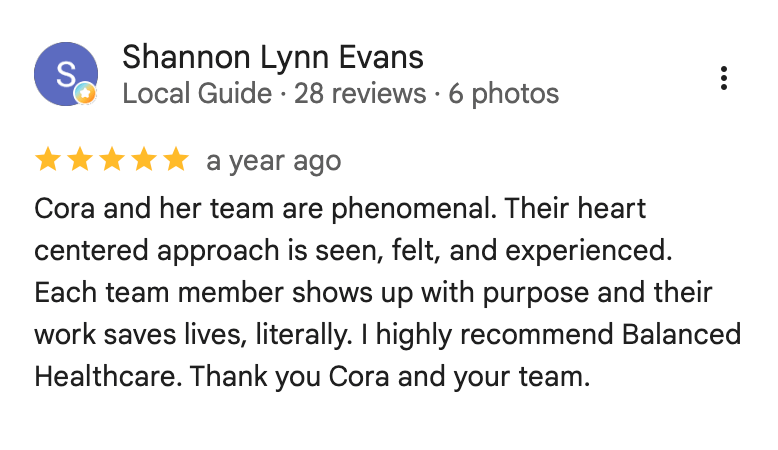
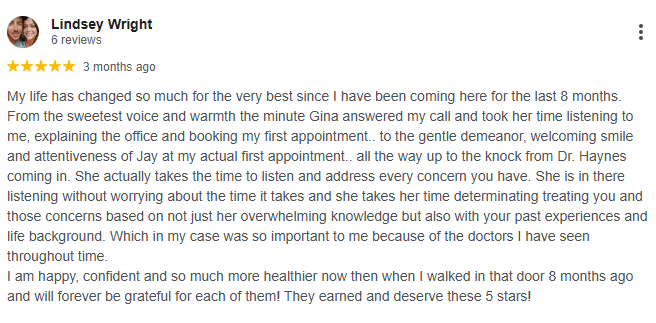
The common denominator throughout all the DPC practices that we see at Hint is that patients love their DPC clinicians. See below for the patient reviews that Angela Andrews, MD of DPC West Michigan, Cora Mattie, MPAS, PA-C of Balanced Healthcare, and Delicia Haynes, MD of Family First Health Center are most proud of.
DPC West Michigan
Balanced Healthcare
Family First Health Center
Sources:
1 2026 Hint Health DPC Trends Report
2 2026 Hint Health’s Patient Experience Bench Report
3 Busch, Frederick "Fritz," and Dustin Grzeskowiak. "Direct Primary Care: Evaluating a New Model of Delivery and Financing." Society of Actuaries, May 2020, <www.soa.org/resources/research-reports/2020/direct-primary-care-eval-model/>.
4 Busch, Frederick "Fritz," and Dustin Grzeskowiak. "Direct Primary Care Research Database (DPC- RD)." Milliman, 11 Jan. 2023, <www.milliman.com/en/video/direct-primary-care-research-database>.
5 Norris, Louise. "Will You Receive an ACA Premium Subsidy?" Healthinsurance.org, 12 Oct. 2026, <www.healthinsurance.org/obamacare/will-you-receive-an-aca-premium-subsidy/>.
6 Simmons-Duffin, Selena. "5 Million Have Dropped ACA Insurance after Trump and the GOP Let Prices Skyrocket." NPR, 27 June 2026, <www.npr.org/2026/06/26/nx-s1-5860746/aca-health-insurance-subsidies-rates-premiums>.
